




Understanding the G major scale is one of the most valuable steps in mastering music theory. It builds the foundation for melody, harmony, ear-training, and composition. With the right explanation, learning this scale becomes simple, musical, and enjoyable. This guide breaks everything down into clear steps, structured definitions, and practical uses, so you can apply it instantly in playing and songwriting.
What is the G Major Scale
The G major scale is a seven-note diatonic scale built on the root note G. It contains one sharp, F#, which gives it a bright, open, uplifting sound. Because of its natural resonance and easy fingering, many musicians learn it early. It appears across genres like folk, pop, classical, and rock.
G Major Scale Notes
The seven notes of the G major scale in order are:
G – A – B – C – D – E – F# – G
Each step moves whole or half intervals. Because F becomes F#, the scale maintains its major structure. Every major scale follows the interval pattern:
Whole – Whole – Half – Whole – Whole – Whole – Half
How to Play the G Major Scale on Guitar
Playing G major scale patterns boosts finger control and speed. Guitarists usually begin with two main patterns. Start on the 3rd fret of the 6th string, use alternate picking, and move slowly. Gradually increase your tempo to strengthen accuracy, tone, and fluidity.
Pattern Example:
- 6th String: 3 – 5
- 5th String: 2 – 3 – 5
- 4th String: 2 – 4 – 5
- 3rd String: 2 – 4 – 5
- 2nd String: 3 – 5
- 1st String: 2 – 3
How to Play G Major Scale on Piano
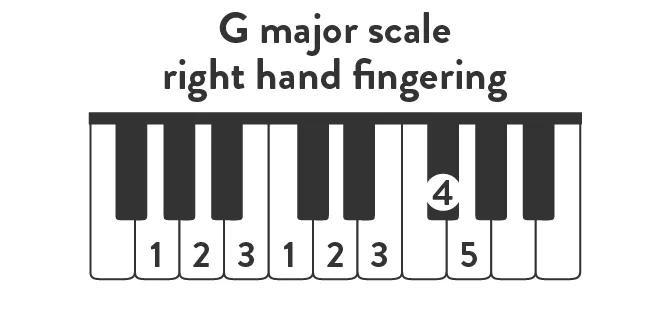
Piano players start on G above middle C. Finger placement matters because clean movement improves control. Play slowly and count note values. Maintain curved fingers, relaxed wrist motion, and light pressure.
Right Hand Fingering: 1-2-3-1-2-3-4-5
Left Hand Fingering: 5-4-3-2-1-3-2-1
Practice hands-separately before combining them.
G Major Scale Chords
Chords naturally form when stacking notes in intervals of thirds. These triads help musicians create progressions, harmonies, and melodies. Use these chords in composition, improvisation, and arrangement.
| Degree | Chord | Notes |
| I | G Major | G-B-D |
| ii | A minor | A-C-E |
| iii | B minor | B-D-F# |
| IV | C Major | C-E-G |
| V | D Major | D-F#-A |
| vi | E minor | E-G-B |
| vii° | F# diminished | F#-A-C |
How the G Major Scale Works in Music
Melodies based on G major scale sound bright and forward-moving. Since most Western compositions follow stable tonal centers, the tonic (G) projects familiarity. Composers use tension and release with the dominant chord (D major) returning home to G. This movement creates emotion, power, and musical storytelling.
Why G Major Scale is Important
Learning the G major scale builds technical control, boosts improvisation, and strengthens understanding of key signatures. Because many instruments resonate well in G, musicians rely on it often. Vocalists prefer it too, since it sits comfortably in mid-register ranges.
G Major Scale in Popular Music
Countless songs use G major scale because of its warm color and singability. Guitar-centered genres lean into G since open strings match scale notes. Consequently, strumming becomes easier and fuller. Arrangers select this key when seeking a bright, celebratory feel.
Tips for Practicing the G Major Scale
Practice slowly, use a metronome, and aim for consistent tone. Increase speed gradually. Focus on finger independence and smooth transitions. Play in ascending and descending order. Add rhythm variations, triplets, and staccato articulation to build style control.
Common Mistakes to Avoid
Rushing practice harms tone. Ignoring finger posture causes uneven phrasing. Skipping F# breaks the tonal structure. Keep your wrist relaxed, maintain steady tempo, and listen closely. Gradual improvement always wins.
Conclusion
With its bright tone, easy fingering, and wide musical application, the G major scale offers endless creative potential. Apply it in chords, melodies, and improvisation. Practice daily, experiment with progressions, write short riffs, and open new musical doors.
FAQs
1. What makes the G major scale unique?
Its single sharp (F#) creates a clear, vibrant sound suitable for many instruments and voice types.
2. What are the primary chords in the G major scale?
G major, C major, D major, E minor, A minor, B minor, and F# diminished.
3. Is G major good for beginners?
Yes, its simple fingering and natural tone make it beginner-friendly.
4. How can I practice the scale effectively?
Use consistent tempo, alternate picking, and slow progression into faster speeds.
5. Which musical styles use G major scale?
Rock, pop, classical, folk, and country frequently rely on this uplifting scale.