



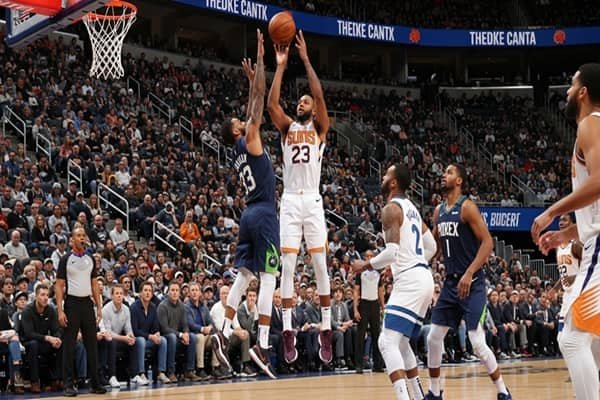
Few NBA games manage to deliver the blend of drama, individual brilliance, and late-game chaos that fans witnessed in the most recent Timberwolves vs Phoenix Suns showdown. For anyone searching for timberwolves vs phoenix suns match player stats, this in-depth analysis covers everything—from standout scorers to efficiency metrics, clutch performances, and the key statistical moments that shaped the final outcome.
This matchup wasn’t just another regular-season contest; it was a showcase of star power, untapped depth, and momentum swings that made every possession feel significant. Below, we break down the full box score and provide sharp insights you can use for analysis, commentary, or pure fandom.
A Thrilling Duel That Went Down to the Wire
From the tip-off, the game promised high-intensity basketball. Minnesota leaned heavily on its athletic wings and interior defense, while Phoenix countered with smart perimeter play and strong half-court execution. The back-and-forth scoring kept both teams closely matched, and the result reflected just how evenly balanced these squads were on the night.
The energy was palpable, and both teams showcased why this matchup remains one of the more exciting Western Conference battles. But beyond the final score, it was the player stats that told the real story of how the game unfolded.
Anthony Edwards Leads the Wolves with a Powerful Scoring Display
No discussion of the timberwolves vs phoenix suns match player stats begins without highlighting Anthony Edwards. The electrifying guard put on a scoring clinic, dropping 41 points with explosive drives, step-back threes, and mid-range pull-ups that kept Minnesota within striking distance throughout.
Key elements of Edwards’ performance:
-
Attacking mentality: He relentlessly pressured the Suns’ defense, forcing rotations and trips to the line.
-
Three-point efficiency: Hitting five shots from beyond the arc, he stretched Phoenix’s perimeter coverage.
-
Two-way activity: Alongside scoring, Edwards added steals, rebounds, and timely defensive stops.
His stat line was not only impressive—it was the centerpiece of Minnesota’s offensive identity in this game.
Julius Randle’s Power and Poise Add Balance to Minnesota’s Offense
Julius Randle provided a strong complementary scoring effort. With 20 points and solid rebounding, he gave the Timberwolves interior strength and a dependable secondary option behind Edwards.
What stood out in Randle’s performance:
-
Consistent mid-range scoring
-
Physical finishes inside
-
Ability to punish mismatches
His presence helped Minnesota maintain momentum, especially during stretches when Phoenix tightened its defensive pressure.
Rudy Gobert Controls the Paint on Defense and the Glass
Rudy Gobert turned in a classic defensive-anchor performance—protecting the rim, cleaning the glass, and making life difficult for Phoenix’s slashers.
Gobert’s contributions included:
-
12 rebounds, emphasizing his dominance on the boards
-
Effortful interior contests
-
Key put-backs and efficient shot attempts near the rim
His stat line showed just how important his defensive presence was in stabilizing Minnesota’s floor spacing and rim pressure.
DiVincenzo, McDaniels, and the Bench Bring Depth and Hustle
Minnesota’s role players made crucial contributions:
-
Jaden McDaniels added double-digit scoring plus disruptive perimeter defense.
-
Donte DiVincenzo played a scrappy two-way game with steals, assists, and timely threes.
-
Naz Reid delivered points and energy off the bench.
Overall, Minnesota’s supporting cast filled in the gaps when the stars cooled off, keeping the game within reach and maintaining the team’s competitive edge.
Suns Respond with Balanced, Efficient Scoring
The Suns approached the matchup with a diversified offensive attack. Instead of relying on just one superstar, Phoenix used a combination of disciplined shot selection, bench production, and tactical ball movement.
Dillon Brooks stepped up as a central figure, delivering 22 points with toughness and precision, while playing sturdy defense on the Wolves’ primary scorers.
Devin Booker Orchestrates the Offense with Scoring and Playmaking
Although not the leading scorer, Devin Booker was undeniably the Suns’ on-court conductor. His stat line featured strong assist numbers and calm offensive control that kept the team steady.
Key highlights of Booker’s performance:
-
Facilitated offensive sets when pressure mounted
-
Hit big shots to halt Minnesota runs
-
Delivered double-digit assists by consistently finding open teammates
His blend of scoring and management ensured that Phoenix’s offense never stagnated.
Mark Williams and Royce O’Neale Add Impactful Shooting and Defense
Mark Williams brought physicality and efficiency, scoring efficiently inside and clogging driving lanes on defense. O’Neale, meanwhile, stretched the floor with key perimeter shots.
Together, they offered Phoenix:
-
Reliable rim protection
-
Rebounding that limited Minnesota’s second-chance points
-
Timely threes that shifted momentum
Their contributions helped balance Phoenix’s lineup and allowed the Suns to push the pace in critical moments.
Collin Gillespie’s Game-Changing Night from the Bench
Perhaps the most surprising stat line belonged to Collin Gillespie. His 20 points off the bench were not only efficient—they were absolutely crucial.
His impact included:
-
Strong perimeter shooting
-
Smart cuts and off-ball movement
-
Composed late-game execution
In a matchup decided by narrow margins, Gillespie’s contributions stood out as one of the defining stories of the night.
Jordan Goodwin Provides High-Energy Production
Another standout bench performer was Jordan Goodwin, who chipped in with scoring bursts, rebounds, and defensive activity. His gritty playing style gave Phoenix valuable boosts during shifts when the starters rested.
Goodwin’s hustle stats complemented the Suns’ rotation perfectly, reinforcing how deep contributions shaped this matchup as much as star performances.
Team Stats Reveal the Real Battle Behind the Score
When analyzing timberwolves vs phoenix suns match player stats, individual numbers don’t tell the whole story. Team statistics revealed deeper insights about pace, efficiency, and the adjustments each team made.
Key takeaways:
-
Phoenix shot with better efficiency, especially from three.
-
Minnesota dominated defensively, forcing turnovers and contesting shots.
-
Both teams crashed the boards hard, making second-chance points a pivotal factor.
-
Turnovers played a huge role, swinging momentum several times throughout the game.
These collective metrics highlight how evenly matched the teams were and why the contest remained tense until the final whistle.
Clutch Moments Defined the Ending
The final minutes showcased everything fans love about high-stakes NBA basketball—momentum swings, high-pressure possessions, and individual brilliance.
Phoenix capitalized on critical opportunities, hitting key shots and executing just enough defensive stops to secure the win. Minnesota fought with intensity but struggled with late possessions, allowing the Suns to edge ahead at precisely the right moment.
The clutch shot-making and composure demonstrated by Phoenix’s guards ultimately sealed the outcome.
Conclusion: A Statistical Showcase Worth Rewatching
This game delivered everything a basketball fan could ask for—elite scoring, physical defense, and multiple players having breakout moments. By exploring the timberwolves vs phoenix suns match player stats, we uncover a story deeper than the final score, shaped by efficiency, hustle, star power, and clutch execution.
Whether you’re analyzing fantasy picks, studying player trends, or simply reliving an unforgettable matchup, these stats paint a full, vivid picture of why this game stood out.
If you enjoyed this deep dive, feel free to explore more NBA insights and breakdowns on mathtrivia, where stats meet storytelling.